


In a dimly lit concert hall, a singular voice rises, weaving intricate melodies that transcend language and culture, drawing listeners into a realm of spiritual ecstasy. This is the magic of Nusrat Fateh Ali Khan, the legendary Pakistani singer and qawwali maestro, revered as the “Voice of Heaven.” As a global ambassador of Sufi music, Nusrat transformed the ancient art of qawwali, blending timeless devotion with universal appeal. This article delves into Nusrat Fateh Ali Khan’s extraordinary life, his innovative approach to qawwali music, his far-reaching global influence, and the enduring legacy that continues to inspire singers and music lovers worldwide.
The Roots of a Legend
A Legacy Born in Faisalabad
Nusrat Fateh Ali Khan was born in 1948 in Lyallpur (now Faisalabad), Pakistan, into a family steeped in musical tradition. His father, Fateh Ali Khan, was a revered qawwali and classical music maestro. Yet, he envisioned a different path for Nusrat—medicine, a stable career. Destiny, however, had other plans. After his father’s passing in 1964, a 16-year-old Nusrat performed at his mourning ceremony, his voice echoing with raw power. This debut marked the beginning of his journey as one of the greatest Pakistani singers.
- Family Heritage: Born into a 600-year-old qawwali lineage, Nusrat inherited a rich musical legacy.
- Father’s Influence: Fateh Ali Khan’s mastery shaped Nusrat’s early exposure to devotional music.
- First Performance: His 1964 debut showcased a prodigy ready to carry the qawwali torch.
Training in Tradition
Nusrat’s mastery of qawwali, a 700-year-old Sufi devotional music tradition, came from years of rigorous training. Under his uncles’ guidance, he honed his craft, blending classical forms like sargam (vocal exercises) and tarana (rhythmic syllables) into qawwali. His dream of performing at Ajmer Sharif, a sacred Sufi shrine, reflected his spiritual calling. This fusion of technique and devotion created a style uniquely his own, setting the stage for his revolutionary impact.
- Rigorous Training: Years of practice under family mentors sharpened his vocal techniques.
- Classical Fusion: Incorporated sargam and tarana, enriching qawwali’s traditional sound.
- Spiritual Drive: His aspiration to sing at Ajmer Sharif fueled his artistic passion.
Revolutionizing Qawwali Music
The Art of Qawwali Redefined
Qawwali music, a form of Islamic devotional music performed at Sufi shrines, is designed to evoke spiritual ecstasy. Nusrat Fateh Ali Khan redefined this art form, infusing it with improvisation and emotional depth. His performances, like the iconic 1993 WOMAD festival in London, introduced qawwali to Western audiences, blending tradition with universal appeal. By modernizing qawwali, Nusrat made it accessible to diverse listeners, from Pakistan to Paris.
- Spiritual Core: Qawwali’s purpose is to connect listeners with the divine through music.
- Innovative Approach: Nusrat’s improvisations added emotional layers to traditional qawwali.
- Global Stage: His WOMAD performance marked qawwali’s entry into world music.
Signature Vocal Techniques
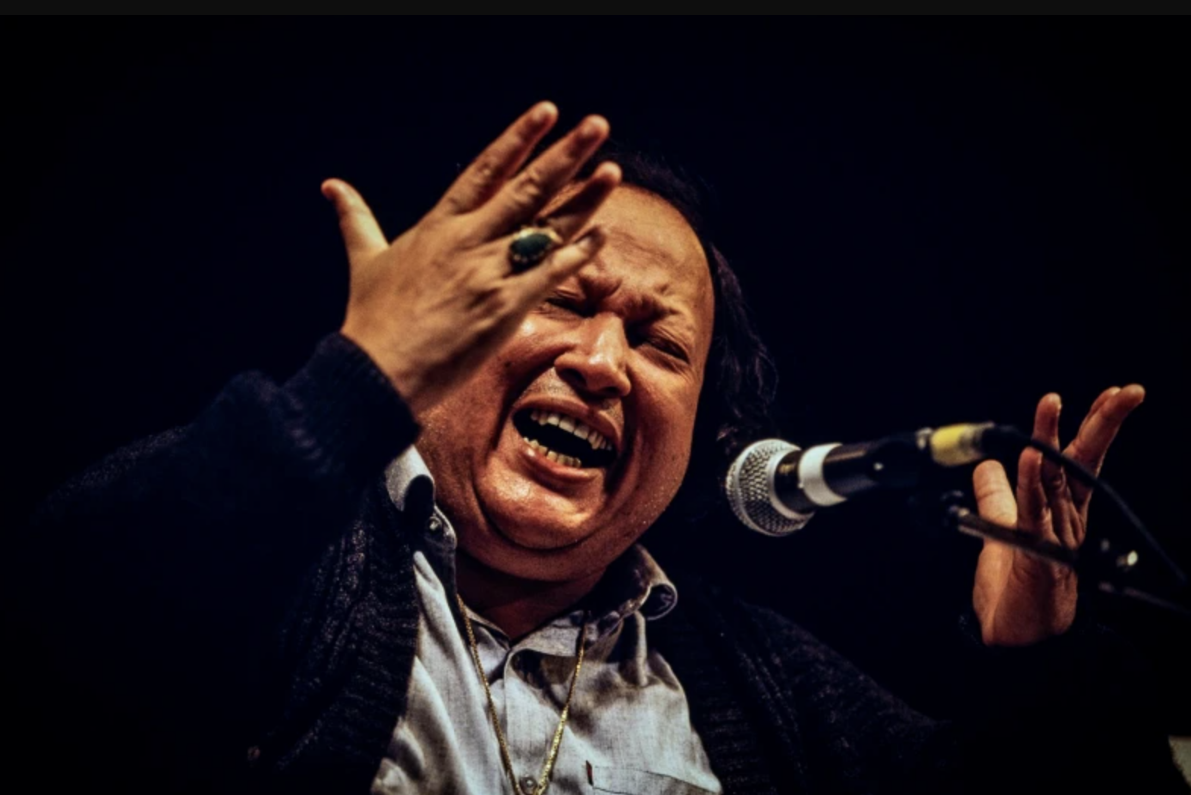
Nusrat’s voice was a force of nature—melismatic runs, soaring highs, and emotive lows that conveyed spiritual rapture. His dynamic range earned him nicknames like the “Singing Buddha” and “Pavarotti of the East.” Musicologists, such as those cited in The Guardian, praise his ability to sustain notes with precision while evoking raw emotion. These vocal techniques influenced singers across genres, from qawwali to pop, cementing Nusrat’s legacy.
- Melismatic Mastery: Long, intricate vocal runs added depth to his performances.
- Dynamic Range: Shifted effortlessly between soft whispers and powerful crescendos.
- Emotional Impact: His voice stirred spiritual and emotional responses, inspiring modern artists.
Global Influence and Collaborations
Crossing Cultural Boundaries
Nusrat Fateh Ali Khan brought qawwali to global stages, performing in London clubs, Paris theaters, and even Hollywood soundtracks. His collaborations with artists like A.R. Rahman on “Gurus of Peace” and Peter Gabriel’s Real World Records introduced Sufi music to new audiences. His voice resonated across cultures, uniting listeners in India, Europe, and beyond. As Rolling Stone noted, Nusrat’s music transcended borders, making him a pioneer of world music.
- Global Reach: Performed in over 40 countries, spreading qawwali’s spiritual message.
- Key Collaborations: Worked with A.R. Rahman and Peter Gabriel, blending East and West.
- Cultural Bridge: His music fostered unity among diverse audiences worldwide.
Impact on Contemporary Artists
Nusrat’s influence extends to artists like Jeff Buckley, who covered his songs, and modern qawwali singers like Rahat Fateh Ali Khan. His work in films like Dead Man Walking showcased his versatility, impacting Bollywood and global cinema. Fan testimonials on platforms like X highlight his enduring relevance, with listeners praising his ability to evoke universal emotions. Nusrat’s legacy lives on through artists who draw inspiration from his innovative spirit.
- Influence on Singers: Inspired artists across genres, from Buckley to Bollywood vocalists.
- Film Contributions: His music in Dead Man Walking elevated qawwali’s cinematic presence.
- Ongoing Relevance: Fans and artists continue to celebrate his emotional depth.
Benefits of Nusrat’s Music
A Spiritual Connection
Nusrat’s qawwali music fosters a profound spiritual connection, rooted in Sufi mysticism. His performances guide listeners toward divine unity, as noted in studies like those in Journal of Music Therapy, which highlight music’s therapeutic effects. Whether at a Sufi shrine or a concert hall, his voice evokes peace, joy, and introspection, offering emotional healing to diverse audiences.
- Sufi Mysticism: Qawwali channels spiritual devotion, connecting listeners to the divine.
- Therapeutic Benefits: Studies show music like Nusrat’s reduces stress and enhances well-being.
- Universal Appeal: His songs resonate with listeners seeking emotional and spiritual depth.
Cultural Preservation and Innovation
Nusrat preserved qawwali’s traditional roots while innovating to reach new generations. His work promoted Pakistani cultural heritage, earning global recognition. Cultural blogs, like those on World Music Central, emphasize his role in safeguarding Sufi traditions while adapting them for modern audiences. This balance ensures qawwali remains vibrant and relevant today.
- Preserving Tradition: Maintained qawwali’s 600-year-old roots with authenticity.
- Global Advocacy: Promoted Pakistani culture through international performances.
- Innovative Spirit: Adapted qawwali to appeal to younger, diverse audiences.
Implementing Nusrat’s Legacy Today
Learning from Nusrat’s Craft
Aspiring singers can learn from Nusrat’s vocal techniques, such as practicing improvisation or focusing on emotional delivery. Online platforms like Coursera offer courses on world music, while music schools teach classical techniques like sargam. Attending Sufi music festivals, such as the Jahan-e-Khusrau in Delhi, provides hands-on exposure to qawwali’s artistry.
- Vocal Practice: Study Nusrat’s melismatic runs and dynamic range for inspiration.
- Educational Resources: Explore online courses or music schools for qawwali training.
- Live Exposure: Attend festivals to experience qawwali’s emotional power firsthand.
Keeping Qawwali Alive
Modern qawwali artists like Rahat Fateh Ali Khan and the Sabri Brothers continue Nusrat’s legacy. Fans can explore his discography, including the rediscovered 1990 album Chain of Light from Real World Records. Reputable platforms like Spotify or cultural organizations like the Aga Khan Music Programme offer authentic qawwali recordings. Attending live performances keeps Nusrat’s spirit alive.
- Modern Artists: Support qawwali singers carrying forward Nusrat’s tradition.
- Recommended Albums: Start with Mustt Mustt or Chain of Light for iconic tracks.
- Cultural Platforms: Use trusted sources to discover authentic qawwali music.
Conclusion
Nusrat Fateh Ali Khan’s journey from a qawwali prodigy in Faisalabad to a global music icon is a testament to his genius. His revolutionary approach to qawwali music, blending tradition with innovation, captivated audiences worldwide. From spiritual performances to Hollywood soundtracks, Nusrat’s legacy endures through his music’s emotional and cultural impact. Dive into his discography, explore qawwali’s spiritual depth, and support artists keeping his vision alive. His voice, a bridge between cultures, continues to inspire and unite us all.
FAQs
What is qawwali music, and how did Nusrat Fateh Ali Khan contribute to it?
Qawwali is a form of Sufi devotional music performed to evoke a spiritual connection. Nusrat modernized it with improvisation and emotional depth, making it a global phenomenon through performances like WOMAD 1993.
Why is Nusrat Fateh Ali Khan called the “Pavarotti of the East”?
His powerful vocal range and global fame earned him this nickname, reflecting his ability to captivate audiences like opera legend Luciano Pavarotti.
How can I start exploring Nusrat’s music?
Begin with albums like Mustt Mustt or Chain of Light on platforms like Spotify. Watch live performances on YouTube for an authentic experience.
What is the significance of Nusrat’s collaborations with Western artists?
Collaborations with artists like Peter Gabriel expanded qawwali’s reach, blending it with world music and introducing it to diverse audiences.
How does Nusrat’s music connect to spirituality?
Rooted in Sufi mysticism, his qawwali evokes divine connection and emotional healing, resonating with listeners seeking spiritual depth.
Discover more exciting blogs at: Virals


